
Auriga Uno: Property development in Sanlúcar de Barrameda
In 2007, a group of investors bought a plot of land in Sanlúcar de Barrameda in southwest Spain. A short time afterwards, Spain entered a crisis of enormous dimensions that hit the construction sector particularly hard. In this scenario, the investors decided to cancel their property development plans. Their situation became more complex with the 2011 financial crisis.
In 2019, faced with the prospect of ruinous divestment, they decided to contact Synesi giving us the mandate to study all options with the view to minimizing their loss. However, we set ourselves a different challenge: to make the investment profitable.
Starting point: the need to commit to property development
As over a decade had passed since they bought the plot, some of the investors had no intention of complicating their lives by developing the project. They suggested selling the land to try to recover their investment. However, when they contacted local agents, they realized that the market price was well below the purchase price.
At Synesi, we put together a team made up of, among others, planning experts and architects to look into possible solutions. The conclusion they came to was that the best divestment was to develop the land. This decision involved confronting a series of problems.
Problem 1: planning restrictions on the plot
According to local planning regulations at the time, the plot could only have two detached homes built on it. These would have to be sold at an unrealistic price to recuperate the investment.
When we looked at the regulations in detail, we realized that a second interpretation was possible and that building three smaller homes would be allowed. This translated to more contained prices and a viable project.
After months of discussions with those responsible for legal and planning aspects as well as endless related enquiries, requests and clarifications, we received the go-ahead.
Problem 2: excess supply of new-build property
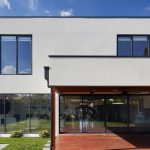
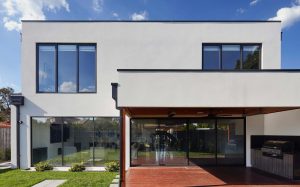
In this instance, we mean properties on developments that weren’t completely sold when the 2008 crisis started. Their design was out of date and didn’t fit in with the current more demanding buyer profile. Our product had to be a much better design, made for people and include a quality of construction that justified the considerably higher price tag. We achieved this goal thanks to the work of Juan Vega Arquitectos.
Problem 3: increase in construction costs
They were at the highest for the last 10 years with builders justifying them by the price of concrete. And because there was a shortage of qualified labor caused by the property crisis. After requesting several quotes, the target cost was 20% higher than the price that guaranteed the project’s viability.
We realized that construction companies subcontracted a large part of the work. In practice, this meant that each specific group of professionals had a price to which the construction company added their margin making the work significantly more expensive.
We decided to contract directly through Synesi, in itself no small logistical and management challenge. We chose the estimates with the best ratios of reputation, quality and price. And to coordinate the teams, we decided to hire a professional responsible for cost control and supervision. Even taking these fees into account, we brought the cost down by over 20%.
Financing the property development, a problem with no apparent solution
The original investors in the project had included the asset in a company, the owner of the plot. When the first crisis arrived, they decided to cancel all loans and debts with financial entities. However, the banks required previous experience in development to approve loans. We argued that the company had contracted Synesi to carry out the project’s development effectively, demonstrating both our experience and that of the professionals in the team we had hired.
The second financial problem was the need to demonstrate that at least 70% of the development had been sold before construction work started. Although several buyers had paid a deposit in an account inaccessible to the company, the banks demanded the guarantee of this account using the partners’ personal assets.
The definitive solution: closing the circle with alternative loans

Due to our previous experience, we were familiar with what is known as project financing within investment banking – loans backed by the quality of project. Or in other words, by the degree of credibility the investors gave it.
This type of loan involves a high degree of trust: the investors in the property development need to trust the manager of it – Synesi in this case. Because there were no real guarantees, the return they demanded would obviously be higher.
We compared the cost of using a traditional loan against hypothetical project finance. The result was that if we could find investors prepared to lend money at 7%, the financial cost would be similar.
At this point, the goal of loss-free divestment appeared achievable. But we set ourselves a greater challenge: to make the project profitable.
The first step was to find out if there were investors in Synesi’s circle prepared to invest in a project with 7% return on the capital invested. The answer was yes.
The second step was to talk to the tradespeople we had contracted and propose a discount for prompt payment (instead of paying within 30, 60 or 90 days as is usual practice in the sector). Not only did they accept the proposal, but they were prepared to give priority to our project. We reduced the schedule to 10 months, saving 6 months of interest payments.
Finally, we had to be able to sell the properties at a minimum of 5% more than if they were sold off plan. This option was only possible with the new form of financing since it didn’t require pre-sales.

Conclusions and learnings
- All these measures meant that the project was profitable by over 14%, easily exceeding initial expectations and reaching the highest ratios found in the sector.
- Once again, Synesi’s consultancy model that selects and brings the best possible team of professionals together for each project, turned out to be decisive. In addition, they only intervened when needed thereby generating costs only when necessary.
We are particularly proud of this project. Partly motivated by the continual obstacles put in our way by financial entities, we achieved success because we don’t think like just another property developer but as entrepreneurs who identified with an exciting project that needed financing.