

More than 20 years have passed since Pritzker prize winner Eduardo Souto de Moura linked the concept of time with architecture and said that “time produces unexpected uses because life is unpredictable”. This has been the case for more than a year in all urban spaces and above all in large population centers where Covid appears to have been even more unpleasant. Cities such as Wuhan, Milan, Madrid and New York have been particularly hard hit by the pandemic. This has sparked the classic debate within urban planning on what sort of city model is the right one and how we should rethink cities post Covid.
Compact cities vs sprawling cities

If we take a moment to compare both models, we will see that both have advantages and disadvantages. The pandemic has made the sprawling model particularly attractive: low residential density and lower use of public transport, in principle suggesting a lower chance of contagion, larger homes and more green areas.
On the other hand, the compact development of cities could suggest a higher health risk, something that many experts in the sector have been quick to contest. Some of the benefits that stand out in this model include the provision of basic infrastructure, wastewater treatment, access to amenities and services as well as lower carbon emissions, an aspect that is also fundamental to our health.
Another salient point is that because health facilities are more specialized in compact cities, the capacity to face a pandemic is better despite the seemingly higher risk of contagion. In fact, according to data in recent research, the impact of the virus has had more to do with the size of the population than its density.
Here, other structural factors in society come into play to understand the dynamics of contagion levels such as the type of employment, the need to commute, access to open spaces and, as was seen in previous pandemics, purchasing power.
Purchasing power & Pandemics
When we talk about rethinking the compact city model, many believe that it would not just be necessary to extend urban parks and balconies and include open spaces in building design. They point out that the model would also have to consider the results of studies already carried out in cities like New York and Madrid; these underline the need for a more equitable model.
According to some reports, the areas with the highest mortality rates are in districts with less access to leisure areas, fewer possibilities to work from home and lower income levels. However, other experts within the sector say that
there is no direct link between areas with higher levels of poverty and a higher incidence of the virus, in both mortality and contagion rates. They believe that the districts with most health workers and hospitals are those that have suffered the least mortality along with areas with a decentralized and autonomous health system plus efficient governments and reputable institutions. They also point out the role played by environmental factors such as temperature and humidity.
How COVID has changed cities
Since the pandemic landed in our lives, we’ve become used to new elements in our urban environments such as dividing panels, tables spaced apart and fluorescent signs on the floor marking out social distances. Other changes are more focused on construction materials or urban mobility. Airports, universities and workplaces have also adapted to an uncertain future. While many of the urban changes may be merely circumstantial, others are laying the foundations for the new post-Covid cities.
Some of the scars left by the pandemic will be at micro-geographical level and are related to two causes: low demand for office use – brought on by remote working – or to the new use of urban land because of the loss of shops on the streets owing to online shopping, a phenomenon that Richard Florida calls “the high street apocalypse”.
Others will affect the way we understand cities globally. Capitals worldwide are already looking at and linking different alternatives such as giant blocks, car-free cities or smarter cities with better monitoring and foresight in the face of future pandemics.
Cities like Milan, Oakland, New York, London and Bogota have chosen to
increase pedestrian areas and bike lanes within their urban space. Paris, under Mayor Anne Hidalgo, has started a project that the city had been working on for some time: the so-called 15-minute city that aims to give quick access to services, leisure and employment in all the city’s districts without the need to use the car.
City planning after this & other pandemics
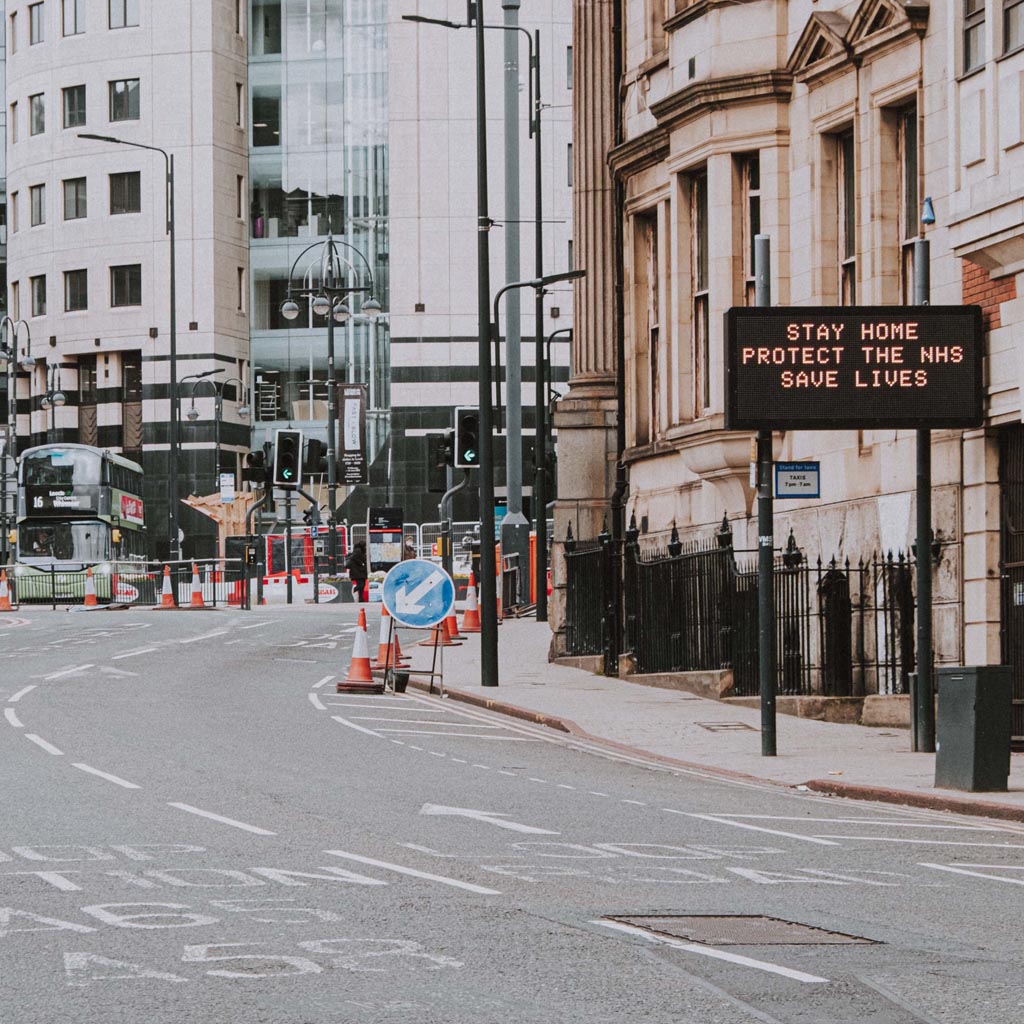
According to the architect Beatriz Colomina, “modern architecture has more to do with health protection than anything else”. The changes in cities since the beginning of the 20th century have taken onboard ideas from doctors and nurses to imagine healthy cities with a lower risk of spreading disease. Colomina explains how the obsession with tuberculosis led to changes in building and lifestyle and the creation of more hygienic spaces. “Disease modernized architecture, not just materials and technology,” the Spanish architect explains.
Some of the first urban planning regulations arrived in the 19th century to control infectious diseases. Measures such as the increase in the size of homes, ventilation and sunlight came about through the fear of illness.
And after every pandemic, society has rebuilt and reimagined itself to fight against health issues more effectively from its population centers. Half a century after the Black Death, which killed a third of the world’s population, the Renaissance was born and with it, the desire to make urban spaces healthier. Cities such as London and Paris installed drains as well as better health systems.
Andrés Rodríguez-Pose, Professor of Economic Geography at the London School of Economics, claims that “the pandemic is a terrible event that no one expected, but even with its negative impact, it brings opportunities to rethink our cities, our regions and the relationship between them”.
Now that the pandemic has revealed the vulnerabilities of globalized mega-cities, architects take on a key role in the new focal points we are moving towards because, as the Danish architect Bjarke Ingels explains, “architecture is one of the leading expressions in this transformation of our planet”.
SOURCES:
Eldiario.es: https://bit.ly/3ggmkmj
Executive Excellence: https://bit.ly/2T4eDaO
Euronews: https://bit.ly/3gjAhjc
Saez Sánchez Arquitectos: https://bit.ly/3zbdBKD
OECD: https://bit.ly/3cly063
The Conservation: https://bit.ly/3x8mouS







No comment yet, add your voice below!